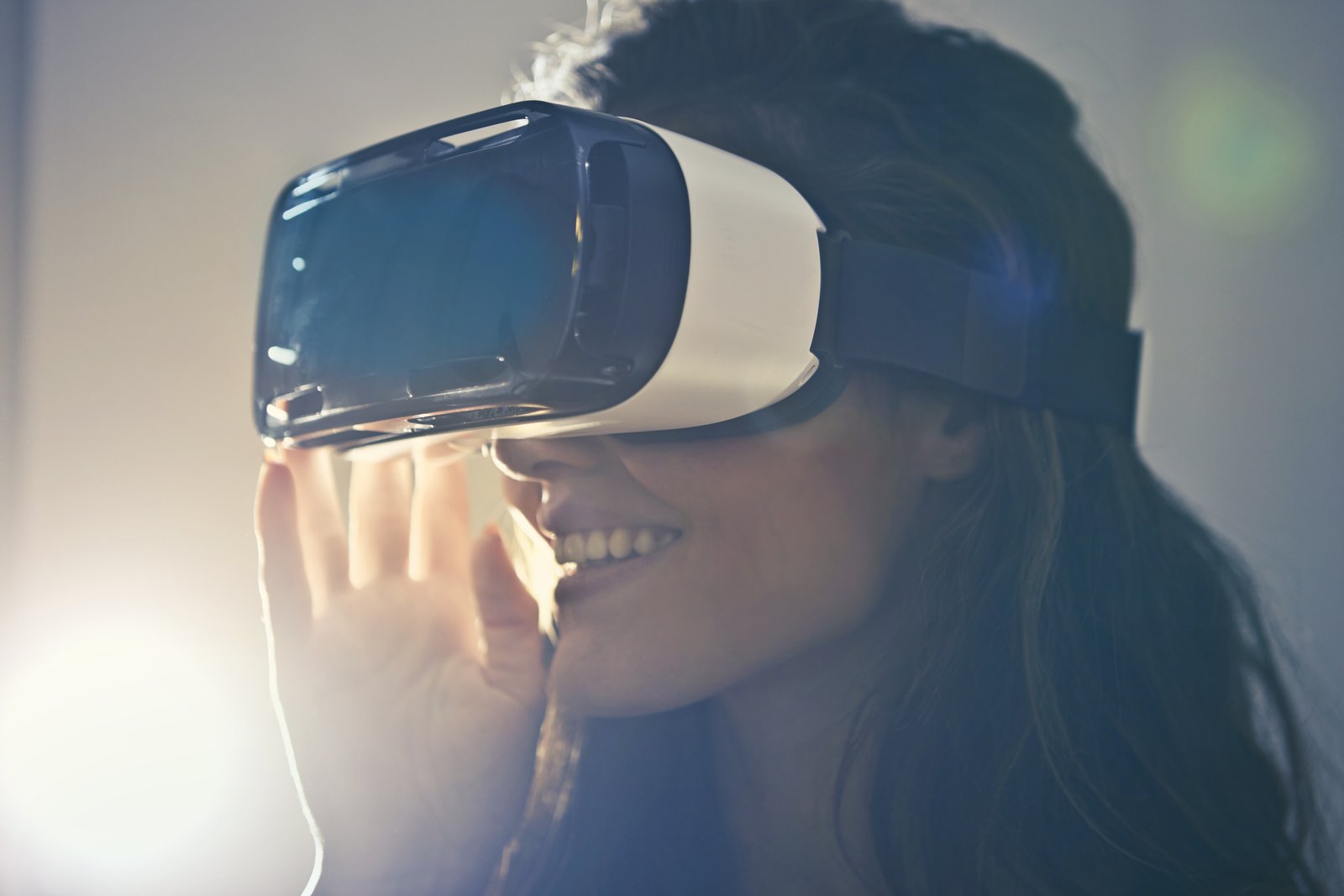
AR and VR in sustainable marketing can help organisations reduce their reliance on certain physical materials, product demonstrations and business travel. Augmented reality (AR) adds digital elements to a real-world view, while virtual reality (VR) creates immersive environments that users can explore through compatible devices.
These technologies offer alternatives to some conventional marketing activities, including physical product sampling, exhibition displays and in-person demonstrations. However, replacing physical experiences with digital ones does not automatically reduce environmental impact. Devices, data processing, software development and electricity consumption must also be considered.
The practical opportunity lies in identifying where AR and VR can replace resource-intensive activities without creating comparable or greater environmental costs.
1. Virtual Try-Ons and Digital Product Sampling
AR-powered virtual try-ons allow customers to preview products such as cosmetics, eyewear and clothing through digital interfaces. L’Oréal, for example, has developed virtual beauty try-on experiences that allow customers to explore different makeup appearances without physically applying every product. These tools may reduce the need for some physical testers, although the scale of any material savings depends on how retailers use them.
Virtual product visualisation can also help customers assess purchases before ordering. Furniture retailers have used AR to show how products might appear in a customer’s home. However, these experiences cannot always communicate material quality, comfort or precise dimensions. Claims about reduced returns require supporting evidence rather than assumptions about improved customer confidence.
For marketers, the strongest application is using virtual sampling to supplement or replace specific physical processes. Organisations should compare sample production, product returns and the resources required to operate the digital experience before claiming environmental benefits.
2. Virtual Showrooms and Remote Product Demonstrations
VR showrooms can allow customers to explore products, configurations and environments without visiting a physical exhibition. Automotive brands, including Audi, have experimented with immersive product presentation to help customers examine vehicle features and design options.
These experiences may reduce the need to transport certain display materials or construct temporary demonstration spaces. However, they do not necessarily eliminate physical showrooms, demonstration vehicles or customer visits. A virtual showroom introduced as an additional marketing channel may increase overall resource consumption rather than replace existing activities.
Businesses should therefore identify which physical activities the technology will genuinely replace. Relevant measurements include exhibition material use, transport requirements, equipment lifespans and the energy needed to deliver immersive experiences.
3. Reducing Business Travel Through Virtual Collaboration
Virtual meetings, training environments and immersive events can provide alternatives to some business travel. VR may be particularly useful for activities involving spatial interaction, simulated environments or practical demonstrations that are difficult to reproduce through conventional video conferencing.
Accenture has publicly discussed its use of immersive technologies for employee experiences and training. However, the existence of a VR training programme does not independently establish emissions reductions. Those benefits depend on whether travel was actually avoided, how frequently the equipment is used and the environmental costs of operating the system.
For routine meetings, standard video conferencing may be more practical and less resource-intensive than VR. Organisations should select immersive technology when it provides a clear functional advantage, rather than treating it as the default sustainable alternative to physical attendance.
4. Reducing Physical Advertising and Display Materials
AR can add interactive content to existing packaging, printed materials or physical environments. For example, customers might scan a product label to access assembly instructions, product demonstrations or additional information without requiring separate printed brochures.
This approach may reduce certain printing and distribution requirements when digital content genuinely replaces physical materials. However, large digital displays, interactive installations and AR campaigns also require equipment, electricity and ongoing maintenance. Pepsi’s well-known interactive bus shelter campaign illustrates creative digital advertising, but it should not be presented as evidence of reduced environmental impact without a supporting assessment.
A more responsible approach is to evaluate the complete campaign rather than comparing printed and digital materials in isolation. Production, distribution, equipment use, maintenance and disposal all influence the environmental outcome.
5. Improving Product Understanding and Purchase Decisions
AR and VR can help customers examine product features, compare configurations and understand how products might function in different settings. This can be useful for furniture, home improvement products, vehicles and equipment requiring careful consideration before purchase.
Better product information may help customers make more suitable decisions, potentially reducing avoidable purchases or returns. However, immersive marketing can also encourage additional consumption by making products more appealing or creating new purchasing opportunities.
Brands should measure outcomes such as return rates, customer satisfaction and product suitability rather than assuming that greater engagement automatically supports sustainability. Environmental benefits should be assessed separately from commercial performance.
6. Considering the Environmental Footprint of AR and VR
Immersive experiences rely on electronic devices, software infrastructure, data transmission and computing resources. VR headsets also involve material extraction, manufacturing, batteries and eventual electronic waste.
Environmental performance depends on how these technologies are developed and used. A headset used extensively over several years may have a different lifecycle impact from equipment purchased for a short promotional campaign and subsequently discarded.
Organisations should consider device longevity, repairability, electricity consumption and the frequency of use. Where possible, existing smartphones or shared equipment may offer a more resource-efficient approach than introducing dedicated hardware.
How Businesses Can Implement AR and VR Responsibly
Identify a Specific Activity to Replace
Begin by examining existing marketing processes that require substantial materials, transport or repeated physical production. Suitable opportunities might include product sampling, temporary exhibition structures or specialised training demonstrations.
Define the expected benefit before investing in technology. A project should have a clear operational purpose beyond offering an immersive experience.
Start With a Limited Pilot
Test the technology with a specific audience or product category before expanding it across the organisation. Compare the pilot with the existing process using relevant indicators, including resource consumption, customer outcomes and operational costs.
A small pilot can reveal whether the technology genuinely replaces physical activities or simply creates an additional marketing channel.
Measure the Complete Environmental Impact
Evaluate both the resources avoided and those introduced by the digital solution. Consider hardware, electricity, data processing, software maintenance and equipment disposal alongside reductions in travel or physical materials.
Where environmental claims are made, explain the measurement boundaries and assumptions. Avoid describing virtual experiences as carbon neutral, zero-waste or inherently sustainable without credible supporting evidence.
Conclusion
AR and VR in sustainable marketing offer practical opportunities to reconsider how brands demonstrate products, communicate information and interact with customers.
Their greatest potential lies in replacing specific resource-intensive activities, particularly where physical samples, travel or temporary displays can be reduced without compromising the customer experience.
However, immersive technologies have their own environmental costs. Businesses should evaluate actual resource savings, select appropriate technologies and avoid treating digital experiences as automatically sustainable.
The objective is not to make every marketing experience virtual. It is to use AR and VR selectively where they provide measurable operational and environmental advantages.