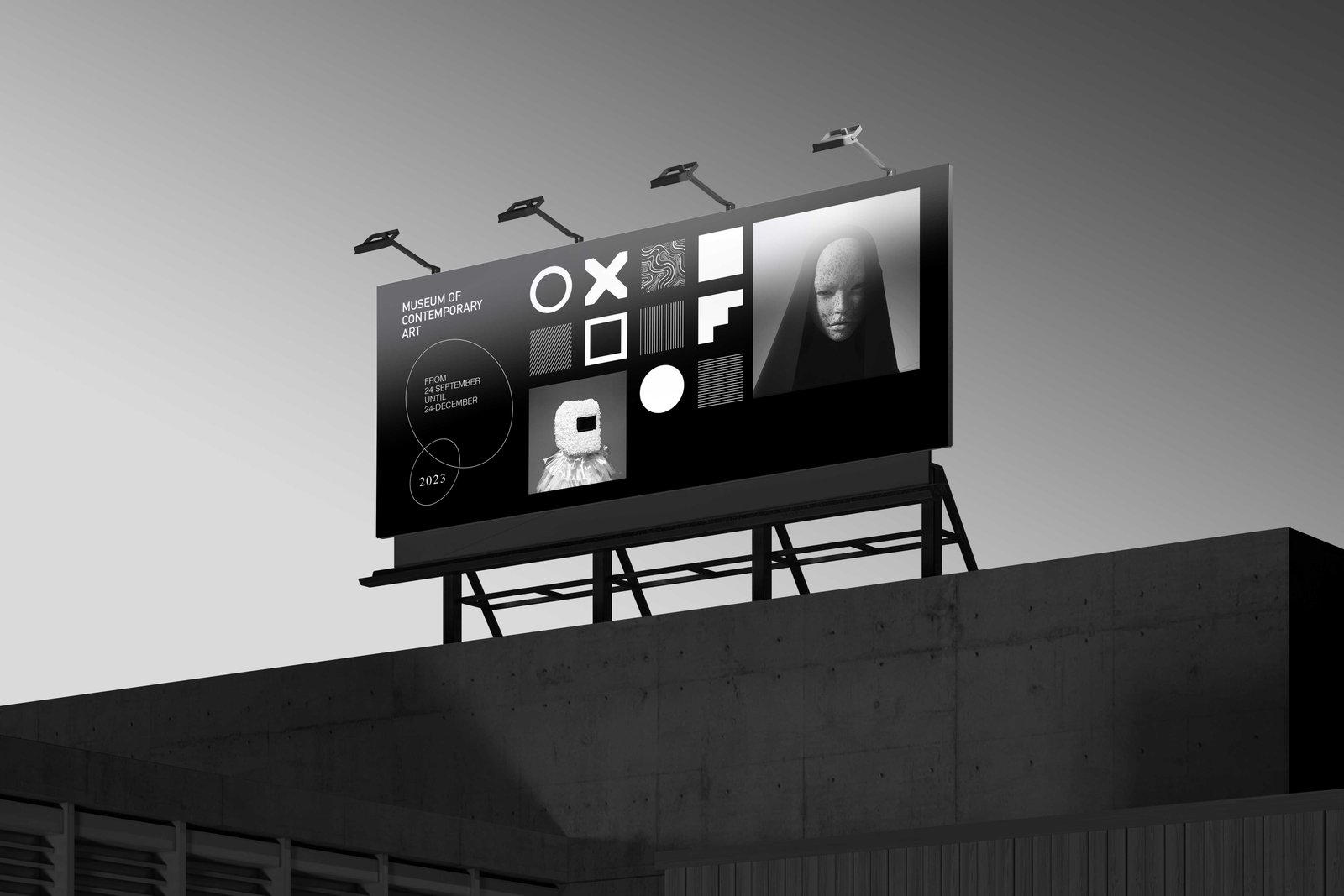
AI-powered outdoor advertising is expanding the possibilities of public communication beyond fixed images and scheduled digital billboards. Interactive posters, responsive displays and data-informed installations can invite people to participate in experiences rather than simply observe advertisements.
A poster might launch a browser-based game through a QR code. A digital installation might change its composition in response to verified environmental measurements. A public artwork could reveal different information as visitors explore a location.
These experiences combine several technologies, including digital signage, sensors, web applications, real-time data, generative AI and interactive design.
Not every interactive installation requires artificial intelligence. Some experiences work more reliably through predefined animations, rule-based interactions or conventional web technology.
AI becomes useful when a project requires capabilities such as generating appropriate visual variations, interpreting permitted user inputs or helping produce creative content within defined constraints.
For sustainability communication, the opportunity is to turn complex environmental information into accessible public experiences. The challenge is to ensure that these installations communicate accurately, respect public space and justify the resources required to operate them.
1. Understand the Difference Between Interactive OOH and AI-Driven DOOH
Out-of-home advertising includes posters, transit displays, billboards and other media encountered outside the home. Digital out-of-home advertising uses electronic displays that can present changing content. Interactive OOH adds opportunities for audiences to influence or explore an experience through phones, touch interfaces, physical controls or other input methods.
AI-driven DOOH introduces an additional layer when machine learning or generative systems are used to support content selection, interpretation or production. For example, a display could use an approved AI model to generate abstract visual variations from a verified dataset. Alternatively, AI might assist designers in preparing the content library while the installed display operates through deterministic rules.
The distinction matters because AI is not automatically the best technical solution. Public installations require reliability, predictable behaviour, readable information and appropriate safeguards. An interactive poster that consistently launches a useful mobile experience may be more effective than a sophisticated display that fails to respond correctly in changing outdoor conditions.
Three Levels of Outdoor Interaction
Level 1 — Connected Poster: A physical poster links to a digital experience through a QR code, NFC tag or short web address.
Level 2 — Responsive Display: A screen changes content according to approved inputs such as time, weather or deliberate user interaction.
Level 3 — Generative Installation: An AI system produces or modifies content within defined creative and operational boundaries.
Each level offers different possibilities, costs and risks.
The appropriate choice depends on the communication objective rather than the desire to use the most advanced technology.
2. Design Playable Posters Around One Clear Interaction
A playable poster combines a public visual invitation with a simple interactive experience. The interaction may happen entirely on a person’s phone or involve a connected display. In either case, the concept should be understandable within a few seconds because audiences are often moving through the space.
A sustainability campaign might ask participants to identify which household items can be repaired, reused or recycled under specified local conditions. Another installation could invite people to arrange components of a circular product system and discover where material losses occur. The educational content should be accurate, and the game should avoid presenting simplified choices as universally correct.
The experience should not require unnecessary personal information. A short browser-based interaction can often operate without creating an account, collecting precise location data or requiring access to the phone’s camera. Where data collection is necessary, the purpose should be explained clearly and participation should remain voluntary.
An Original Concept: The Repairable City
A street poster presents an illustrated city made from modular objects.
Visitors scan a QR code to open a short mobile game.
They choose whether to repair, replace, share or discard different items.
Each decision reveals practical information about product durability, repair access and local services where verified information is available.
The public poster remains readable without scanning.
The digital experience provides additional depth rather than withholding essential information.
This creates a meaningful connection between play and education without claiming that virtual decisions produce direct environmental savings.
3. Create Living Feeds From Reliable Public Data
A living feed is a visual system that changes according to defined inputs. These might include weather observations, environmental monitoring data, transport information or scheduled public events. The installation can translate changes in those inputs into colours, shapes, movement or explanatory content.
Environmental data requires careful interpretation. Air quality measurements may refer to particulate matter, nitrogen dioxide or other pollutants. Atmospheric carbon dioxide concentration is a different measurement and should not be presented as an interchangeable indicator of local air quality. Data sources, locations, timestamps and limitations should be visible or accessible to the audience.
Designers must also distinguish measured information from artistic interpretation. A display that changes colour according to an air-quality index is not literally showing what the air looks like. The visual transformation is a design choice. Explaining that relationship can make the installation more educational and reduce the risk of misleading viewers.
An Original Concept: The Air Quality Canvas
A digital installation uses a verified local air-quality dataset.
Its abstract geometry changes according to clearly defined index categories.
A short explanation identifies the measured indicator, data source and most recent update.
The artwork does not claim that the displayed colours represent the actual appearance of the atmosphere.
When data becomes unavailable, the installation shows a neutral fallback rather than inventing values.
The result is a public visualisation that combines creative interpretation with transparent information.
4. Use Sensors Without Turning Public Spaces Into Surveillance Systems
Sensors can support interactive experiences by detecting conditions such as ambient light, temperature or the activation of a physical control. Some installations may use cameras or microphones, but these introduce additional privacy, consent and governance concerns.
The original idea of emotion-sensing billboards is particularly problematic. Inferring a person’s emotional state from facial expressions or other observed signals is scientifically contested and can be unreliable across contexts and populations. It also raises significant privacy and regulatory questions. Public advertising should not depend on covert emotional profiling.
A more responsible approach uses deliberate interaction wherever possible. A visitor might press a button, choose an option on a phone or activate a clearly identified control. Environmental sensors can provide contextual information without attempting to identify individuals. If camera-based counting is considered, the organisation must evaluate whether the function is necessary and whether less intrusive alternatives are available.
A Privacy-First Interaction Checklist
Define exactly what information the installation needs.
Prefer anonymous environmental measurements or deliberate user inputs.
Avoid collecting identifiable images, voice recordings or precise movement histories unless genuinely necessary and lawfully justified.
Explain data use in accessible language.
Establish retention limits and security requirements.
Provide a meaningful way to experience the installation without surrendering unnecessary personal information.
Public-space creativity should not depend on invisible surveillance.
5. Build Outdoor Experiences for Reliability, Accessibility and Resource Efficiency
Outdoor installations operate under conditions that differ substantially from controlled indoor environments. Sunlight, rain, temperature changes, background noise and pedestrian movement can affect usability. Screens must remain legible, interactive elements must be easy to understand, and any physical equipment must meet applicable safety and installation requirements.
Accessibility should be considered from the beginning. A QR code alone excludes people who cannot or do not wish to use a smartphone. Audio-only instructions exclude people who cannot hear them. Rapidly flashing or highly animated visuals may create difficulties for some viewers. An effective design offers appropriate alternatives and avoids making participation dependent on a single sensory or technical capability.
Environmental performance also deserves scrutiny. Large digital displays, continuous animation, network connections and repeated AI inference consume resources. A campaign should not claim environmental benefits merely because it replaces a printed poster with a screen. The comparison depends on equipment production, electricity use, operating duration, maintenance, printing, installation and disposal. Resource efficiency should be treated as a design requirement rather than an assumed benefit.
Practical Production Principles
Use existing display infrastructure where suitable.
Limit unnecessary animation and computational processing.
Prepare approved visual assets in advance when live generation offers little additional value.
Choose suitable display brightness and operating schedules.
Provide clear fallback content when connectivity or data feeds fail.
Design for maintenance, accessibility and eventual equipment reuse or responsible disposal.
These decisions can improve operational discipline without requiring unsupported environmental savings claims.
Six Original Interactive Outdoor Campaign Concepts
The following are hypothetical concepts intended to demonstrate different creative and technical approaches.
1. The Packaging Puzzle
A physical poster invites visitors to assemble a product’s packaging components in a browser-based puzzle.
Each component reveals its material properties and relevant disposal considerations.
The experience explains why packaging design and local collection infrastructure both matter.
2. The Urban Heat Portrait
A digital artwork translates verified temperature observations into changing geometric forms.
The display identifies the source and timestamp of the information.
Supporting content explains the distinction between weather observations, surface temperature and long-term urban heat patterns.
3. The Conservation Corridor
An interactive mural illustrates how habitat fragmentation affects wildlife movement.
Visitors explore different hypothetical land-use arrangements.
The experience explains ecological trade-offs without presenting the simulation as a prediction of real-world outcomes.
4. The Repair Route
A poster connects visitors to an interactive directory of verified repair services.
The experience allows users to explore repair categories and practical considerations.
Location sharing is optional, and the directory can be searched manually.
5. The Water Systems Wall
A public installation uses abstract movement to explain the relationship between water supply, consumption and treatment.
Visitors select different scenarios to reveal how the system operates.
The installation distinguishes illustrative models from measured local data.
6. The Community Question Board
A digital display presents moderated questions about a local environmental issue.
Visitors can submit questions through an accessible web form.
Qualified project partners provide verified answers that appear on the display after review.
The experience prioritises public understanding rather than collecting pledges or generating promotional content.
A Ten-Step Production Framework
Step 1: Define the Communication Objective
Identify the specific information, action or experience the campaign should deliver.
Avoid introducing interaction simply to make the installation appear technologically advanced.
Step 2: Assess the Physical Location
Review visibility, pedestrian flow, lighting, accessibility and applicable permissions.
Consider whether the experience could distract road users or obstruct public movement.
Step 3: Select the Interaction Model
Choose between a connected poster, responsive display or generative installation.
Use the simplest technology capable of delivering the intended experience.
Step 4: Establish the Information Architecture
Define the content participants will encounter.
Separate educational information from promotional messages.
Step 5: Verify Data Sources
Document the origin, meaning and update frequency of any environmental or contextual information.
Create clear procedures for missing or outdated data.
Step 6: Develop the Creative System
Establish approved visual styles, interaction states and content boundaries.
Use AI-assisted generation where it provides a genuine production or creative advantage.
Step 7: Build Privacy and Accessibility Safeguards
Minimise data collection.
Provide alternative ways to access essential information.
Step 8: Test in Real Conditions
Evaluate readability, interaction speed, device compatibility and technical resilience.
Test with representative users where practical.
Step 9: Monitor Operation
Track system reliability, data accuracy and relevant participation measures.
Respond promptly to errors or inappropriate generated content.
Step 10: Evaluate and Retire Responsibly
Assess whether the campaign met its communication objectives.
Review equipment reuse, asset retention and any relevant environmental outcomes.
Document lessons for future installations.
Where AI Adds Genuine Value
AI can support interactive outdoor advertising in several specific areas.
Creative development: Generating alternative visual directions and modular assets.
Content adaptation: Preparing variations for different approved contexts or languages.
Information retrieval: Helping users explore a controlled collection of verified educational content.
Interactive generation: Producing bounded visual responses to deliberate user choices.
Operational analysis: Identifying technical faults or analysing appropriately collected, nonidentifying interaction data.
Each application requires suitable human oversight.
Public installations should not allow unrestricted generation of factual environmental claims.
Where content changes automatically, the system needs safeguards against inaccurate, offensive or inappropriate outputs.
In many cases, curated content and rule-based interaction will be more dependable than continuous generative AI.
Measuring the Value of Playable Outdoor Advertising
A campaign should distinguish exposure from participation and participation from meaningful outcomes.
Exposure indicators may include estimated audience reach or display opportunities, subject to the limitations of the measurement method.
Interaction indicators may include QR visits, completed activities and use of optional educational resources.
Learning indicators may include appropriately designed comprehension questions or feedback.
Operational indicators include uptime, accessibility issues, technical failures and maintenance requirements.
Environmental indicators require separate evidence of real-world changes. Completing a virtual recycling game, for example, does not demonstrate that participants subsequently recycled more material.
The evaluation method should reflect the campaign’s stated objective rather than treating every interaction as evidence of impact.
Common Mistakes to Avoid
Using AI where simple interaction would work better: Unnecessary complexity increases operational risk.
Presenting emotion recognition as reliable audience insight: Facial expressions are not dependable measures of individual emotional states.
Confusing carbon dioxide with local air pollution: Different environmental indicators require different explanations.
Collecting unnecessary personal information: Public interaction does not justify intrusive profiling.
Making smartphones mandatory: Essential information should remain accessible without scanning a code.
Ignoring display energy and equipment lifecycles: Digital installations are not inherently environmentally preferable to print.
Allowing unrestricted live generation: Public-facing AI outputs need appropriate constraints and oversight.
Designing only for viral sharing: A photographable installation is not necessarily an informative or effective one.
Reporting virtual actions as environmental achievements: Digital participation and real-world outcomes must be measured separately.
Conclusion: Public Interaction Should Serve a Purpose
Interactive outdoor advertising can transform a poster or display into an educational, creative or participatory experience.
AI expands some of these possibilities, particularly in visual generation and controlled content adaptation.
But the strongest installations are not necessarily the most technically elaborate.
They are the ones that communicate clearly, operate reliably, respect the public and make thoughtful use of available resources.
For sustainability campaigns, the opportunity lies in helping people explore environmental information through experiences that are accurate, accessible and relevant to the place in which they appear.
A playable poster should offer more than a moment of novelty.
It should give people a worthwhile reason to interact.